Contents
Why Are My Money Tree Leaves Turning Yellow Find Out the Causes and Solutions

If you have a money tree plant and you’ve noticed that its leaves are turning yellow, you may be wondering what’s causing this issue. Yellowing leaves on a money tree can be a sign of various problems, and it’s important to identify the cause in order to find the appropriate solution. In this article, we will explore some common reasons why money tree leaves turn yellow and provide tips on how to address these issues.
One possible cause of yellowing leaves on a money tree is overwatering. Money trees prefer well-draining soil, and if they are consistently overwatered, the roots can become waterlogged, leading to yellowing leaves. To prevent overwatering, make sure to allow the soil to dry out between waterings and avoid leaving the plant sitting in water.
Another potential cause of yellow leaves is insufficient sunlight. Money trees thrive in bright, indirect light, and if they are not receiving enough light, their leaves may start to turn yellow. Consider moving your money tree to a location with more natural light or providing additional artificial light if needed.
Pests can also be a culprit behind yellowing leaves on a money tree. Common pests that can infest money trees include spider mites, mealybugs, and aphids. These pests can cause damage to the leaves, leading to discoloration. To address a pest infestation, you can try using insecticidal soap or neem oil, or consult with a professional for further guidance.
In conclusion, yellowing leaves on a money tree can be a sign of overwatering, insufficient sunlight, or a pest infestation. By identifying the cause and taking appropriate measures, such as adjusting watering habits, providing adequate light, or treating for pests, you can help your money tree regain its health and vibrant green foliage.
Causes of Yellowing Money Tree Leaves
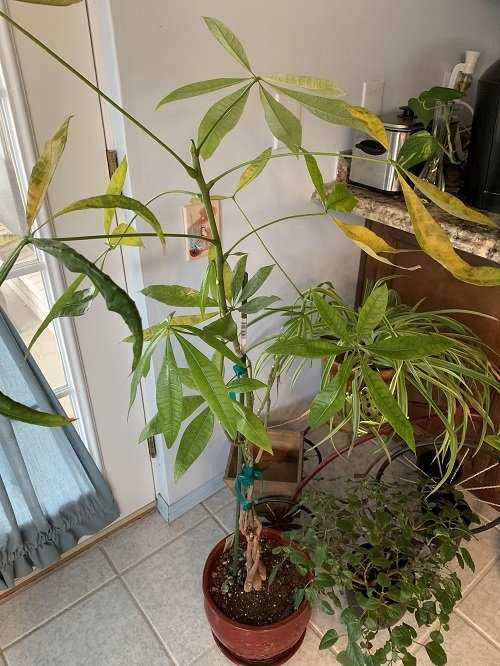
Yellow leaves on a money tree can be a sign of various issues. Understanding the causes of yellowing leaves can help you address the problem and prevent further damage to your tree.
- Overwatering: Excess water can lead to root rot, causing the leaves to turn yellow. Make sure to water your money tree only when the top inch of soil feels dry.
- Underwatering: Lack of water can also cause yellowing leaves. Ensure that your money tree is receiving enough water, especially during hot and dry periods.
- Improper drainage: If the pot doesn’t have proper drainage holes, excess water can accumulate, leading to root rot and yellowing leaves. Consider repotting your money tree in a container with drainage holes.
- Insufficient light: Money trees thrive in bright, indirect light. If your tree is not getting enough light, the leaves may turn yellow. Move your tree to a brighter location, but avoid direct sunlight.
- Nutrient deficiency: Lack of essential nutrients, such as nitrogen, iron, or magnesium, can cause yellowing leaves. Use a balanced fertilizer specifically formulated for houseplants to provide the necessary nutrients.
- Pest infestation: Certain pests, such as spider mites or mealybugs, can attack money tree leaves and cause them to yellow. Inspect your tree regularly for signs of pests and treat them accordingly.
- Temperature stress: Money trees prefer temperatures between 65-80°F (18-27°C). Extreme cold or hot temperatures can cause the leaves to yellow. Keep your tree away from drafts and avoid placing it near heating or cooling vents.
By identifying and addressing the underlying cause of yellowing leaves, you can help your money tree regain its health and vibrant green foliage.
Overwatering

Overwatering is one of the most common reasons for money tree leaves turning yellow. When the roots of the money tree are constantly sitting in water, they can become waterlogged and start to rot. This can lead to a lack of oxygen reaching the roots and cause the leaves to turn yellow.
To prevent overwatering, it is important to ensure that the money tree is planted in well-draining soil. The soil should allow excess water to flow out of the pot, preventing the roots from becoming waterlogged. It is also important to avoid watering the money tree too frequently. Instead, allow the top inch or two of soil to dry out before watering again.
If you suspect that your money tree is suffering from overwatering, it is important to take action quickly. Remove the plant from its pot and inspect the roots. If they are brown and mushy, they have likely rotted due to overwatering. Trim off any rotting roots and repot the money tree in fresh, well-draining soil.
Additionally, make sure to adjust your watering routine to prevent overwatering in the future. Monitor the moisture levels of the soil and only water when it is dry to the touch. By preventing overwatering, you can help keep your money tree healthy and prevent its leaves from turning yellow.
Underwatering
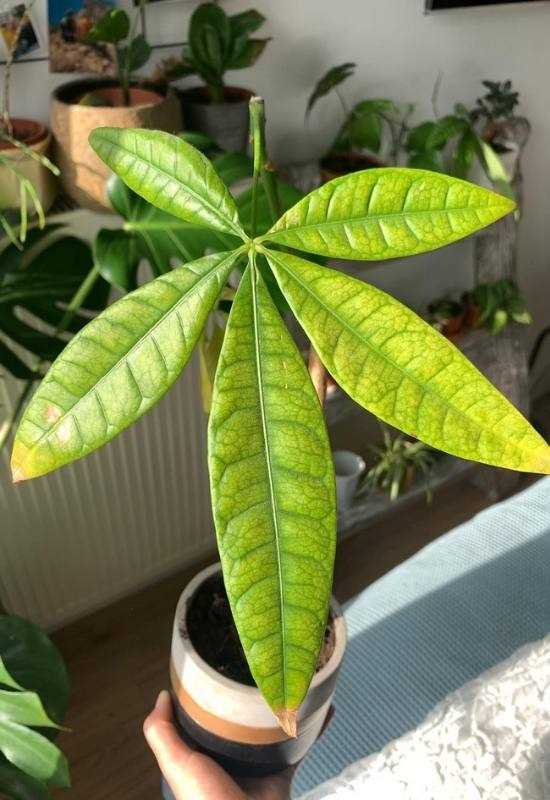
Underwatering is one of the main causes of yellowing and turning leaves on a money tree. When a money tree doesn’t receive enough water, its leaves can start to turn yellow and eventually fall off. This is because the lack of water prevents the tree from properly absorbing nutrients and carrying out essential functions.
To prevent underwatering, it is important to establish a regular watering schedule for your money tree. The frequency of watering will depend on various factors such as the size of the pot, the type of soil, and the environment it is in. However, as a general rule, it is recommended to water your money tree when the top inch of soil feels dry to the touch.
When watering your money tree, make sure to thoroughly soak the soil until water drains out of the bottom of the pot. This ensures that the roots receive enough water and helps prevent the accumulation of salts in the soil. Avoid letting your money tree sit in standing water, as this can lead to root rot.
If you notice that the leaves of your money tree have already turned yellow due to underwatering, you can try to revive the plant by increasing the frequency and amount of water you give it. However, be careful not to overwater, as this can also cause problems for the tree.
Additionally, it is important to consider the humidity levels in the environment where your money tree is located. Low humidity can increase the risk of underwatering, as the dry air can cause the soil to dry out more quickly. You can increase humidity by placing a tray of water near the plant or by using a humidifier.
Lack of Sunlight
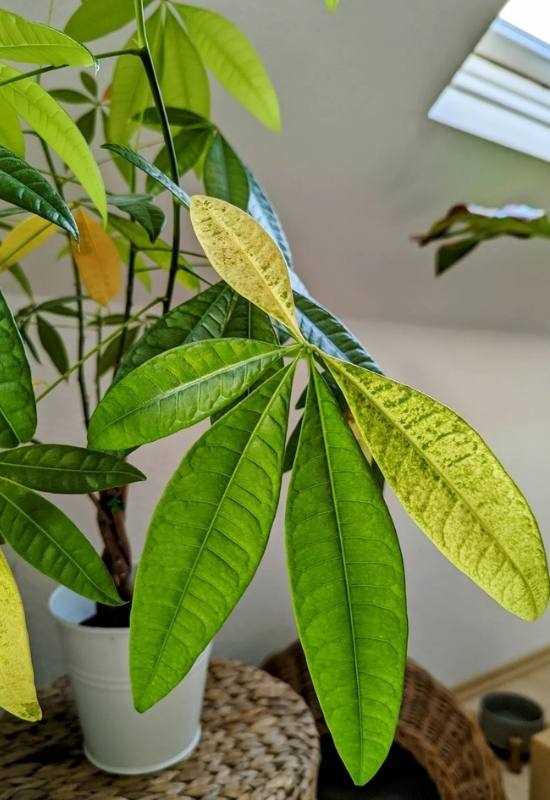
A common reason for money tree leaves turning yellow is a lack of sunlight. Money trees, like other plants, need adequate sunlight to carry out photosynthesis and produce energy. When a money tree doesn’t receive enough sunlight, its leaves may start to turn yellow.
Money trees are native to tropical rainforests, where they thrive in the dappled sunlight that filters through the dense canopy. In indoor environments, it’s important to place the money tree in a location where it can receive bright, indirect sunlight for several hours a day.
If your money tree is not getting enough sunlight, you may notice that the leaves closest to the light source remain green while the leaves farther away start to turn yellow. This is because the leaves closest to the light are able to absorb more energy for photosynthesis.
To remedy a lack of sunlight, consider moving your money tree to a brighter location. Place it near a window that receives plenty of indirect sunlight or use artificial grow lights to supplement the natural light. Just be careful not to expose the money tree to direct sunlight, as this can scorch the leaves.
Remember that each money tree is unique and may require slightly different lighting conditions. Monitor your plant closely and adjust its position as needed to ensure it receives the right amount of sunlight for optimal growth.
Solutions for Yellowing Money Tree Leaves

If you notice that the leaves of your money tree are turning yellow, it is important to address the issue promptly to ensure the health and vitality of your plant. Here are some solutions to consider:
- Adjust watering: Overwatering or underwatering can both lead to yellowing leaves. Ensure that you are watering your money tree appropriately by checking the soil moisture. The top inch of soil should be dry before watering again.
- Check drainage: Poor drainage can also cause yellowing leaves. Make sure your money tree is planted in a pot with drainage holes to allow excess water to escape.
- Provide adequate light: Insufficient light can result in yellowing leaves. Money trees thrive in bright, indirect light. If your plant is not receiving enough light, consider moving it to a brighter location or supplementing with artificial light.
- Adjust temperature: Extreme temperatures can stress your money tree and cause leaf yellowing. Money trees prefer temperatures between 65°F and 75°F (18°C and 24°C). Avoid placing your plant near drafts or in direct sunlight.
- Address pests: Pests such as spider mites or mealybugs can cause yellowing leaves. Inspect your money tree for any signs of pest infestation and treat accordingly using organic or chemical methods.
- Fertilize appropriately: Nutrient deficiencies can manifest as yellowing leaves. Fertilize your money tree with a balanced houseplant fertilizer according to the package instructions. Avoid overfertilizing, as this can lead to salt buildup and further damage the plant.
By implementing these solutions, you can help prevent further yellowing of your money tree leaves and promote a healthy, vibrant plant.
Adjust Watering Schedule

The yellowing and turning of leaves on a money tree can often be attributed to improper watering. Overwatering or underwatering can both lead to leaf discoloration and eventual leaf drop.
To ensure proper watering, it is important to establish a regular watering schedule for your money tree. Here are some tips to help you adjust your watering schedule:
- Check soil moisture: Before watering, check the moisture level of the soil by sticking your finger about an inch into the soil. If it feels dry, it’s time to water. If it feels moist, wait a few more days before watering.
- Water thoroughly: When watering, make sure to thoroughly saturate the soil until water drains out from the bottom of the pot. This helps to flush out any excess salts or minerals that may have accumulated in the soil.
- Drain excess water: After watering, make sure to empty any excess water that has collected in the saucer or tray beneath the pot. Standing water can lead to root rot and other issues.
- Adjust frequency: Depending on the environment and season, you may need to adjust the frequency of your watering. During the warmer months, when the money tree is actively growing, it may require more frequent watering. In the cooler months, when growth slows down, you may need to water less frequently.
By adjusting your watering schedule and ensuring that your money tree is receiving the right amount of water, you can help prevent yellowing and turning of the leaves. Remember to also consider other factors such as light levels, temperature, and humidity, as they can also affect the health of your money tree.
Video:Why Are My Money Tree Leaves Turning Yellow Find Out the Causes and Solutions
17 Money Tree Care Indoor Tips For Yellow Leaves | How To Prune A Money Tree Plant #PachiraAquatica

Hello, I am Beverly J. Sanders, the voice behind the diverse articles you come across on styves.co.za. My passion lies in exploring the nuances of home improvement and sharing tips that can help you transform your living space into a haven of comfort and style. From the latest trends in home decor to practical cleaning advice, I cover a broad spectrum of topics to cater to a wide variety of interests.
In my recent works, I have delved into the advantages of incorporating a horizontal Murphy bed into your home to save space without compromising on design and functionality. I also explored the benefits of having a free-standing electric fireplace that not only adds warmth to your home but also brings a sleek and modern design to any living space. My articles are a rich resource, offering insights into different products and home improvement strategies that can enhance the quality of your life.
I believe in the power of details; a belief that reflects in my comprehensive guides where I discuss even the overlooked aspects of home decor, such as the impact of baseboard trim in enhancing the overall look and feel of your home. I am constantly on the lookout for innovative solutions and products that can add value to your home and life.
Join me in my exploration as I continue to bring you the latest trends, tips, and insights in the home improvement world. Let’s create a home that is not just a place to live, but a reflection of style and personality.